The record
Written from the 4 reports below. Nothing here is unsourced.
No Reader read of this story yet.
What changed4
Every report on this story, newest first. Times are when each outlet published.
Aaj Tak[1]
US से वार्ता के लिए गिड़गिड़ा रहा ईरान? बाघेई बोले- ये हमारे DNA में नहींAaj Tak[2]
अमेरिका ने ईरान पर हमला रोकने की पुष्टि की, देखें दुनिया आजतकMint[3]
Middle East Tensions Ease as the US and Iran Pause HostilitiesThe Hindu BusinessLine[4]
US, Iran pause attacks for second day as ceasefire talks gather pace
Why it matters5
Who is affected first and what likely follows, with a direction and a horizon. Extracted from the reports, never invented.
- Brent crude oil prices price decline· immediate
- Global shipping / Strait of Hormuz chokepoint risk eased· days
- Iranian military capabilities kinetic damage· weeks
- Saudi oil installations houthi attack exposure· days
- Global gasoline consumers fuel cost relief· days
Coverage3
4 reports
English national2Indian-language2
All filed from IndiaSingle origin
Named United States · Iran · Oman · Ali Khamenei · Axios · Bahrain · Benjamin Netanyahu · Dan Kain · Donald Trump · Esmail Baghaei · Fox News · Hezbollah · Houthis · Iraq
- Aaj TakUS से वार्ता के लिए गिड़गिड़ा रहा ईरान? बाघेई बोले- ये हमारे DNA में नहीं[1]Indian-language· neutral
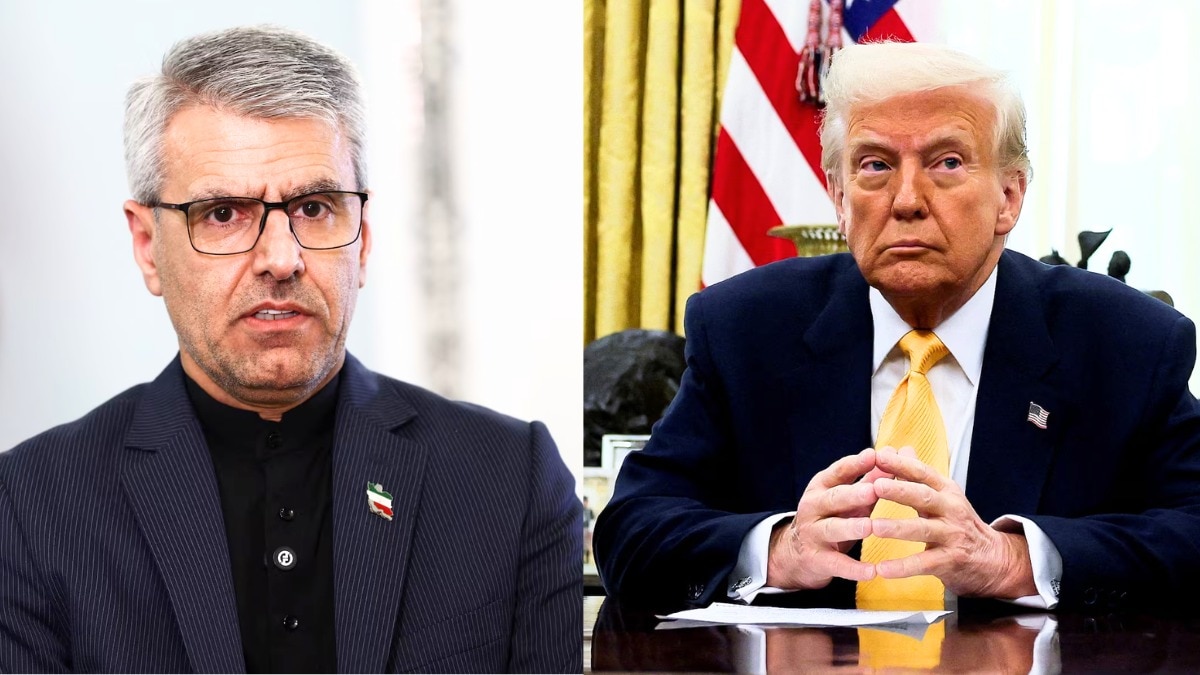
- Aaj Takअमेरिका ने ईरान पर हमला रोकने की पुष्टि की, देखें दुनिया आजतक[2]Indian-language· neutral
- MintMiddle East Tensions Ease as the US and Iran Pause Hostilities[3]English national· neutral

- The Hindu BusinessLineUS, Iran pause attacks for second day as ceasefire talks gather pace[4]English national· neutral

The 4 reports are listed beside the record.
Ask this story
Answers cite the reports above, or say they can't.