The record
Written from the 2 reports below. Nothing here is unsourced.
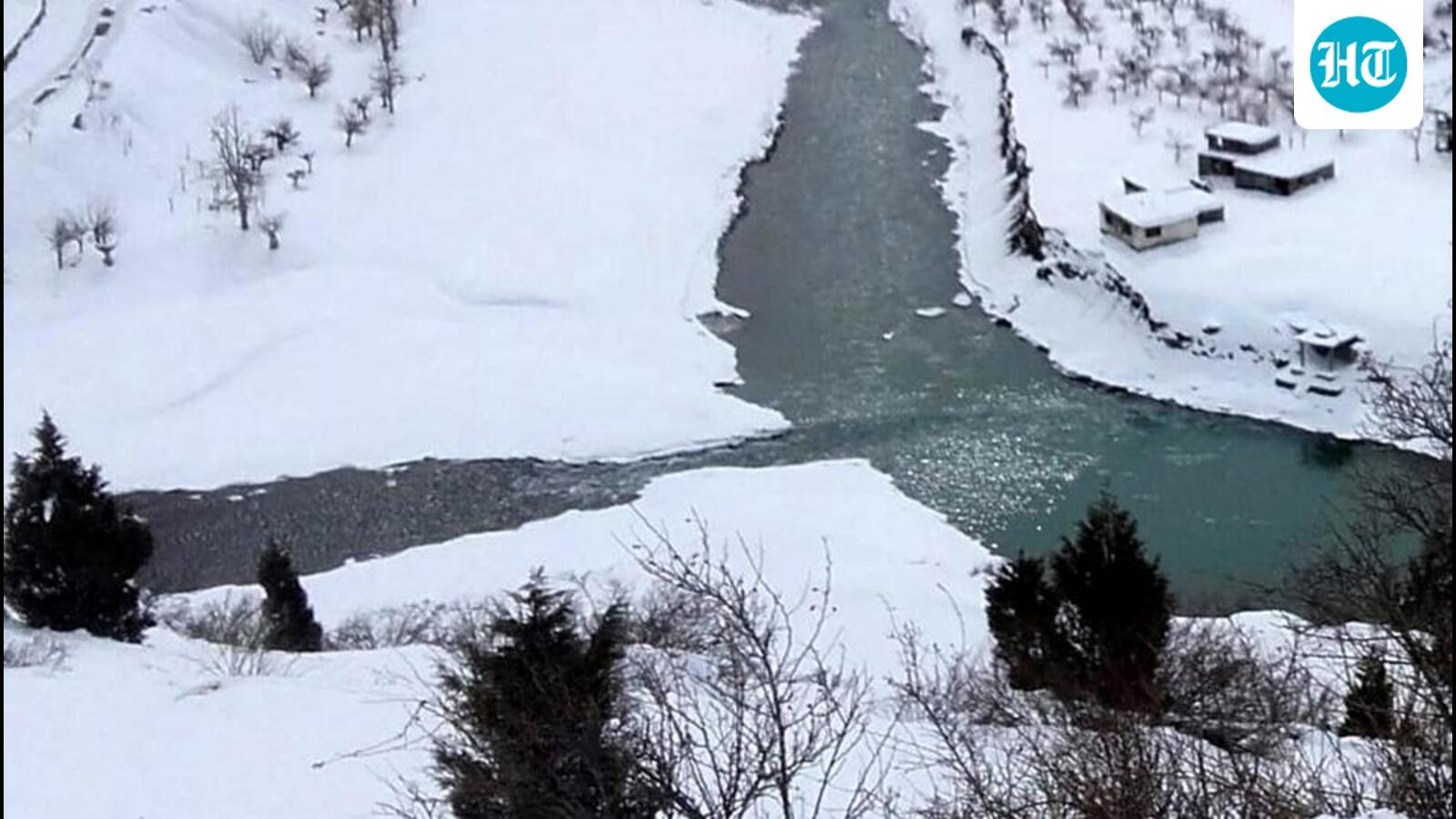
- New research finds that glaciers in Uttarakhand's Central Himalaya are shrinking rapidly, retreating by an average of about 23.23 metres every year.
- A scientific review covering 23 major glaciers in the Indian Central Himalayas attributes the retreat primarily to climate change, with local topographical factors also contributing.
- The findings matter because these glaciers feed river systems that large populations across northern India rely on for water, farming and hydropower, and sustained ice loss reshapes that supply over decades.
- The reported studies centre on the retreat measurements themselves; they do not yet quantify downstream water or hazard impacts, which remain open questions.
- Coverage so far is uncontested: Hindustan Times and Aaj Tak both relayed the findings neutrally, with no disputed figures or political framing.
- The key thing to watch is whether Uttarakhand or the central government responds with expanded glacier monitoring or adaptation planning, and whether follow-up research prices in the downstream consequences.
What to watch next
- Watch for government response: Uttarakhand monitoring or climate adaptation plans
- Follow-up studies quantifying downstream water flows and glacial-lake hazards
- Updated retreat rates for the 23 reviewed glaciers in future research
- Whether Indian climate policy debates cite the new glacier data
What changed2
Every report on this story, newest first. Times are when each outlet published.
Hindustan Times3h ago[1]
Uttarakhand glaciers retreat 23m a year on average; some lose 88m: StudyAaj Tak4h ago[2]
खतरे में देवभूमि के 23 ग्लेशियर! 25 KM पिघली बर्फ, नई रिसर्च से बढ़ी टेंशन
Who said what4
Only words found exactly in the article are shown, attributed and linked to the line they came from.
Manish Mehta
4 quotes · 2 outlets
“Although the response varied substantially between individual glaciers, retreat rates ranged from about 3.7 metres per year for relatively stable or heavily debris-covered glaciers such as Bhagirathi (Bhagirathi valley, Uttarkashi district) and Satopanth (Chamoli district) to as much as 88 metres per year for Khatling Glacier (Bhagirathi valley, Tehri Garhwal), a clean-ice glacier”
In the article
…Girish C Kothyari and Atul Kumar Patidar of the University of Petroleum and Energy Studies (UPES), Dehradun. According to Mehta, the average frontal retreat rate across the Central Himalaya was 23.23 metres a year. “ Although the response varied substantially between individual glaciers, retreat rates ranged from about 3.7 metres per year for relatively stable or heavily debris-covered glaciers such as Bhagirathi (Bhagirathi valley, Uttarkashi district) and Satopanth (Chamoli district) to as much as 88 metres per year for Khatling Glacier (Bhagirathi valley, Tehri Garhwal), a clean-ice glacier ,” he said. Clean-ice glaciers more vulnerable to melting The study found a marked difference in retreat rates between clean-ice and debris-covered glaciers. Clean-ice glaciers are particularly vulnerable to rapid…
“This means less snow is being added to the glacier while more ice is being lost through melting and other processes. As a result, the glacier’s mass balance becomes increasingly negative or, in simple terms, it is losing more ice than it is gaining each year”
In the article
…risen by nearly 500 metres in some regions since the beginning of the century. Mehta said the rise has reduced the amount of fresh snow available to glaciers and pushed their mass balance further into the negative. “ This means less snow is being added to the glacier while more ice is being lost through melting and other processes. As a result, the glacier’s mass balance becomes increasingly negative or, in simple terms, it is losing more ice than it is gaining each year ,” he said. Warming and precipitation trends shape glacier retreat The study identified the period around 2000 as an important climatic turning point. Meteorological and reanalysis datasets showed that the late 20th…
Related reporting
Grouped by subject or cast while the story boundary is under human review. No chronology is implied.
Loading the story…
Why it matters3
Who is affected first and what likely follows, with a direction and a horizon. Extracted from the reports, never invented.
- Central Himalaya glaciers (Uttarakhand) glacier retreat· longer
- Downstream river systems and water availability reduced long term water supply· longer
- Himalayan communities and infrastructure glacial hazard exposure· longer
Coverage2
All filed from India
Named India · Bhagirathi Glacier · Chorabari Glacier · Gangotri Glacier · Khatling Glacier · Milam Glacier · Pindari Glacier · Satopanth Glacier · Uttarakhand · Atul Kumar Patidar · Discover Geoscience · Girish C Kothyari · Jyoti Kumari
The 2 reports are listed beside the record.
Ask this story
Answers cite the reports above, or say they can't.