Missing ticket alone cannot defeat railway compensation claim: Supreme Court
Headline by Prism · from 3 reports
The Supreme Court of India ruled that the absence of a train ticket does not invalidate a compensation claim for an accident victim.
 The Hindu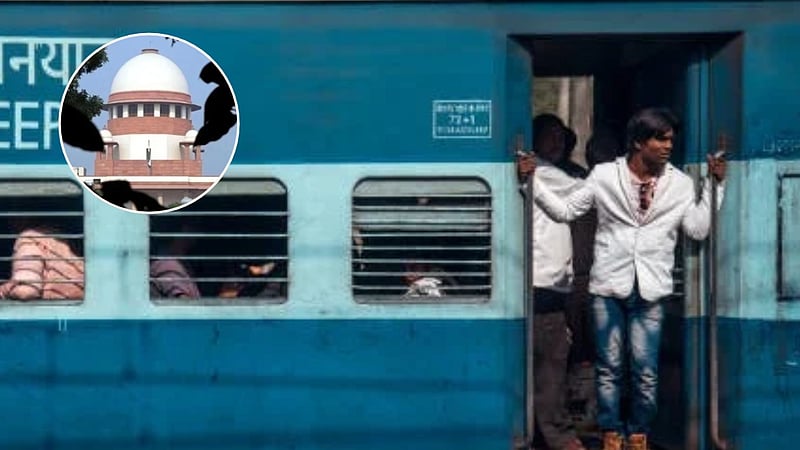
The brief
Written by software from the 3 reports below.
- India's Supreme Court has ruled that the absence of a train ticket does not invalidate a compensation claim for a railway accident victim, meaning families can claim even when no ticket can be produced.
- The judgment, reported by Deccan Herald, The Hindu and Hindustan Times, removes a practical barrier that often blocked or weakened claims after deaths and injuries during rail travel.
- It matters most for victims' relatives who lost documents in the accident itself, traveled without a ticket, or whose tickets were destroyed, since the missing ticket had previously been used to question whether the person was ever a passenger.
- Coverage is aligned and neutral: all three outlets describe the same holding, with no reported railway objection, government comment, or dissenting legal view.
- The broader effect is likely a lower evidentiary bar for pending and future compensation cases, with the railways absorbing correspondingly higher liability.
- What happens at the claims level — and whether the Railways respond — will show the ruling's real reach.
What to watch next
- Whether Indian Railways seeks review or revises claim procedures
- If earlier claims rejected over missing tickets are reopened
- How Railway Claims Tribunals accept alternate proof of travel
- Any reported rise in compensation claims after the ruling
The points restate the reports; where one says why it matters, that is Prism's reading, not a reported fact.
What changed
Every report on this story, newest first. Times are when each outlet published.
Who said what
Only words found exactly in the article are shown, attributed and linked to the line they came from.
Ujjal Bhuyan
2 quotes · 2 outlets
“The High Court gave undue importance to the absence of the railway ticket without taking into consideration the statement made on oath by the victim's father and the fact that the victim had been hospitalised for a period of more than one month. On the preponderance of probabilities, it can be concluded that the victim was a bona fide passenger and that absence of recovery of his ticket cannot result in defeating the claim for compensation.”
In the article
…compensation awarded to the parents of Maheshbhai, who died falling off the general compartment following a sudden jerk and jolt while travelling to Surat via Ahmedabad on September 27, 2017. The Bench on Friday said, " The High Court gave undue importance to the absence of the railway ticket without taking into consideration the statement made on oath by the victim's father and the fact that the victim had been hospitalised for a period of more than one month. On the preponderance of probabilities, it can be concluded that the victim was a bona fide passenger and that absence of recovery of his ticket cannot result in defeating the claim for compensation. " On June 17, 2022, the Railways Claim Tribunal held that Maheshbhai was the victim of an 'untoward incident' and suffered an accidental fall, and his parents, who are the claimants, were held entitled to compensation…
“The high court gave undue importance to the absence of the railway ticket without taking into consideration the statement made on oath by the victim's father and the fact that the victim had been hospitalised for a period of more than one month. On the preponderance of probabilities, it can be concluded that the victim was a bona fide passenger and that absence of recovery of his ticket cannot result in defeating the claim for compensation.”
In the article
…compensation awarded to the parents of Maheshbhai, who died falling off the general compartment following a sudden jerk and jolt while travelling to Surat via Ahmedabad on September 27, 2017. The bench on Friday said, " The high court gave undue importance to the absence of the railway ticket without taking into consideration the statement made on oath by the victim's father and the fact that the victim had been hospitalised for a period of more than one month. On the preponderance of probabilities, it can be concluded that the victim was a bona fide passenger and that absence of recovery of his ticket cannot result in defeating the claim for compensation. " Deep Dive On June 17, 2022, the Railways Claim Tribunal held that Maheshbhai was the victim of an 'untoward incident' and suffered an accidental fall, and his parents, who are the claimants, were held entitled to…
Related reporting
Grouped by subject or cast while the story boundary is under human review. No chronology is implied.
Why it matters
Who is affected first and what likely follows, with a direction and a horizon. Extracted from the reports, never invented.
- Rail accident victims and their familiescompensation claim eligibilitydays
- Indian Railwayscompensation liability increasedays
- Railway Claims Tribunalsalternate evidence accepteddays
Coverage
3 outlets
All filed from India
NamedIndia · AS Chandurkar · Atul S. Chandurkar · Gujarat High Court · Maheshbhai · Railway Claims Tribunal · Railways Claim Tribunal · Sukhabai Nanjibhai Makwana · Supreme Court · Ujjal Bhuyan · Union of India
- The Hindu[1]Non-recovery of train ticket from deceased passenger can't defeat compensation claim: Supreme Court
- Hindustan Times[2]Non-recovery of train ticket from deceased passenger can't defeat compensation claim: SC
- Deccan Herald[3]Missing ticket alone cannot defeat railway compensation claim: Supreme Court
The 3 reports are listed beside the record.
Corrections and versions
A correction says what was wrong and why. Every earlier headline and brief of this record is kept.
Something wrong?
Say what, and it arrives with this record's address filled in. A correction is welcome.
Ask this story
Answers cite the 3 reports above, or say they can't.