The record
Written by software from the 1 report below. The points restate them; where one says why it matters, that is Prism's reading, not a reported fact.
- Terry Fox was diagnosed with osteogenic sarcoma at age 18, which led to the amputation of his right leg.
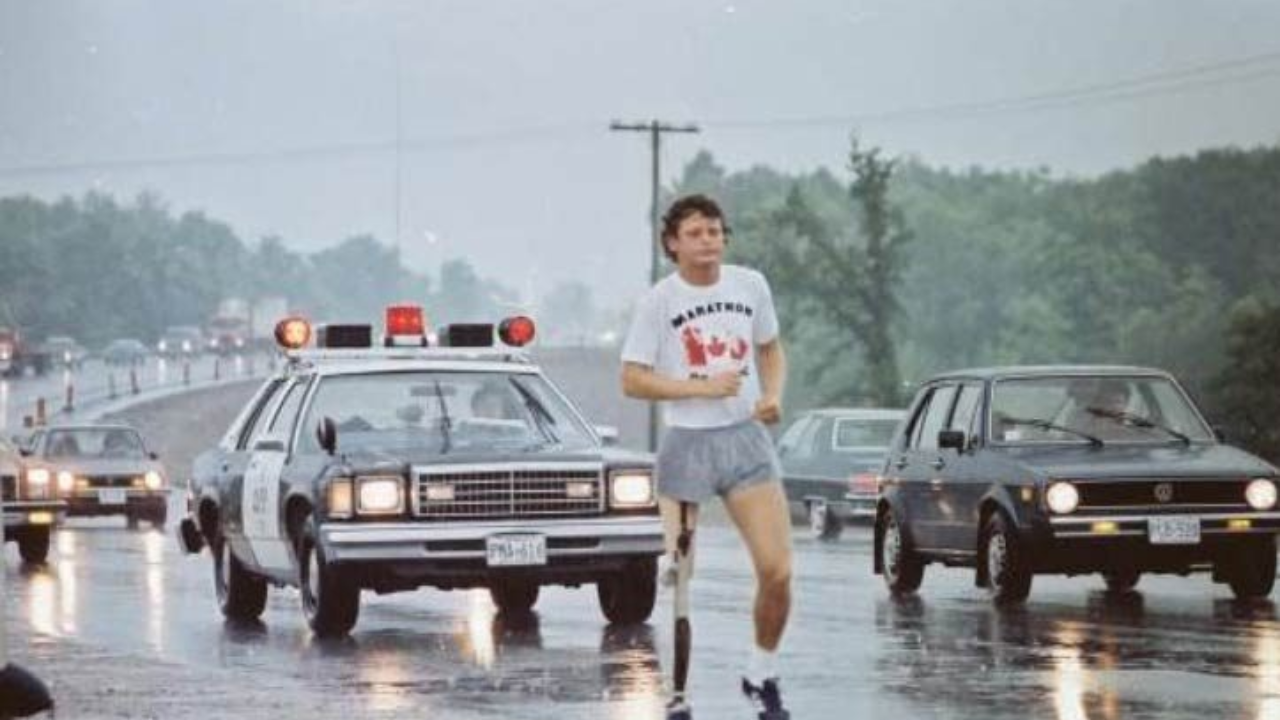
- He subsequently launched the Marathon of Hope in 1980, running 5,373 kilometres across Canada to increase cancer research funding.
- Fox maintained a rigorous daily schedule of 42 kilometres despite the limitations of his prosthetic limb.
- The journey concluded prematurely near Thunder Bay after doctors discovered his cancer had spread to his lungs.
- His efforts established a lasting legacy in cancer awareness and research advocacy.
Who said what1
Only words found exactly in the article are shown, attributed and linked to the line they came from.
Terry Fox Foundation
1 quote · 1 outlet
“He ran through snow, rain, wind, heat, humidity. He stopped in more than 400 towns, schools and cities to talk about why he was running. He started at 4:30am in the morning, and often did not finish his last mile until 7pm at night”
In the article
…awareness for cancer research along the way. He ran close to 42 kilometres daily. His route took him through six provinces, and crowds gradually began gathering along roads and in towns to watch the young runner pass. " He ran through snow, rain, wind, heat, humidity. He stopped in more than 400 towns, schools and cities to talk about why he was running. He started at 4:30am in the morning, and often did not finish his last mile until 7pm at night ," Terry Fox Foundation says on its website. There was also a deeper irony to the journey: Fox was running to raise money for cancer research while still carrying the possibility that cancer could return. On September…
Coverage1
All filed from India
Named Canada · Terry Fox · Terry Fox Foundation
The 1 report is listed beside the record.
Corrections and versions
A correction says what was wrong and why. Every earlier headline and brief of this record is kept.
Something wrong?
Say what, and it arrives with this record's address filled in. A correction is welcome.
Ask this story
Answers cite the reports above, or say they can't.